


Traction battery regeneration and battery condition reports
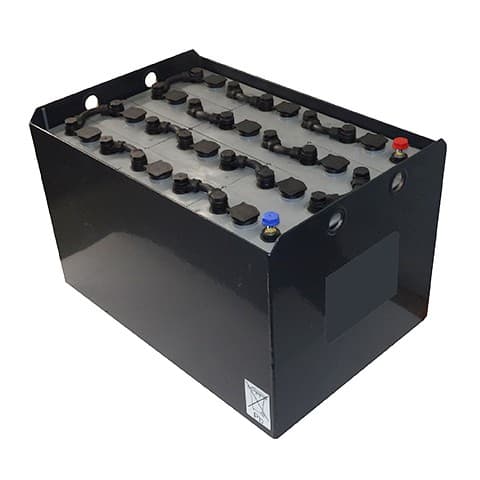
We regenerate traction batteries made of 2 V cells for aerial work platforms, forklift trucks, pallet trucks, cleaning machines and other electric machines: from 24 to 80 V, small and large. Regeneration recovers the capacity lost through sulphation, without chemicals, using controlled discharge and charge cycles. Trojan-type 6, 8 and 12 V monobloc batteries, which power some of the aerial lifts, we test for capacity and give a condition report: how many ampere-hours they really deliver. Regeneration from PLN 1,490 + VAT, capacity test with a report from PLN 390 + VAT. Service by RK Rental in Brzoza near Bydgoszcz.
When is it worth testing or regenerating a battery?
- An aerial lift or forklift truck runs on one charge for much less time than it used to
- The charge indicator drops quickly, and under load the machine slows down or switches off
- The charger finishes charging suspiciously fast, or the battery gets very hot
- The machine stood discharged for a long time: after winter, a break in work or in a warehouse
- You are buying a used machine and want to know how much is really left in the batteries
- You received a new set and want to check that it has its full capacity
Why does a battery lose capacity?
In a lead-acid battery, lead sulphate forms on the plates at every discharge. When the battery stands discharged for a long time or is charged "a little at a time", the sulphate hardens into crystals that an ordinary charger can no longer dissolve. This is sulphation: the active surface of the plates shrinks, the internal resistance rises and the machine works for a shorter and shorter time.
In traction batteries the regenerator breaks up these crystals by an electrical method: it takes the battery through controlled discharge and pulse charging cycles, measuring current, voltage and temperature. On the way it measures how many ampere-hours the battery delivers before regeneration and after it.
From our experience: even a new one can have half
Even a new traction battery can deliver only about half of its capacity after delivery, most often after lying in a warehouse for a long time. You cannot see this by eye or with a voltmeter. A capacity test shows it in black and white, before the battery lets you down at work.
Monobloc batteries (e.g. Trojan T105, T145) from lifts: condition report
Some scissor lifts and electric cherry pickers run on 6, 8 or 12 V Trojan-type monobloc batteries, and the rest have a traction battery of 2 V cells. We test monobloc batteries for capacity and prepare a report on the condition they are in: how many ampere-hours they deliver and what percentage of the rated capacity that is. You then know what shape they are in and what to expect in operation.
We do not offer regeneration of monobloc batteries: such batteries are rarely suitable for it. Sometimes they can be revived and we have had successful attempts, especially with larger capacities, but the result is uncertain, so we do not urge customers to do it. We direct regeneration at traction batteries made of 2 V cells, including those from aerial lifts.
What do a battery test and regeneration give you?
You know how much is left
The capacity test measures how many ampere-hours the battery really delivers. You get a number and a percentage of the rated capacity, not an estimate by eye.
You recover capacity
In traction batteries made of 2 V cells, regeneration breaks down the sulphation of the plates by an electrical method, with controlled discharge cycles and pulse charging, without chemicals and without taking the battery apart.
You buy only when you need to
A full set of new batteries is a large expense. The report shows whether the present ones will still do, whether regeneration will help or whether it is time to replace them.
The machine lasts a whole shift again
A regenerated battery that delivers its capacity again lasts a full shift of an aerial lift, forklift truck or cleaning machine.
How does battery regeneration work, step by step?
- 1
Reception and inspection
We check the case, terminals and voltage. We establish whether it is a traction battery of 2 V cells or 6, 8 or 12 V monobloc batteries (e.g. Trojan type), whether it is flooded or sealed, and the voltage and capacity from the rating plate: the settings and whether regeneration makes sense depend on these.
- 2
Capacity test
We discharge the battery with a constant 10-hour current, 10% of the C10 capacity (for batteries rated in C5 we take C10 ≈ C5 + 10%), down to 1.7 V per cell. The device counts the ampere-hours delivered: this is the real capacity of the battery.
- 3
Regeneration of the traction battery
Regenerative charging up to 2.6 V per cell, first with a current of 1/10, then in pulses with a current of 1/20 of the capacity. A sensor on the battery monitors the temperature.
- 4
Second cycle and measurement after regeneration
The whole cycle is repeated: another discharge shows the capacity after regeneration, and the final charge returns the battery full.
- 5
Report
Capacity before and after regeneration in ampere-hours and as a percentage of the rated capacity, a chart from the device's recorder and our recommendation: continue working, another cycle or replacement.
The standard programme takes up to 52 hours of running time of the device. A heavily sulphated battery additionally gets a long charge with a low current. A capacity test alone, without regeneration, is one discharge and one charge.
What batteries do we regenerate?
- Traction batteries made of 2 V cells in a steel tray, flooded (with plugs for topping up water): these are what we mainly deal with
- Sealed gel and AGM batteries: capacity test with a report only
- 24 V, 36 V, 48 V, 72 V and 80 V batteries, from small to large, with a capacity of several hundred ampere-hours and more
- Scissor and vertical mast lifts and electric cherry pickers with a traction battery, forklift trucks, pallet trucks, cleaning machines and other electric machines
- Several sets at once, connected in series, up to a total voltage that fits within the range of the device
Trojan-type 6, 8 and 12 V monobloc batteries we only test and describe in a report: why. We do not regenerate lithium-ion batteries: this method applies only to lead-acid batteries.
Buying a used machine from us?
On request we will run a capacity test of the batteries and prepare a report on their condition: the measured capacity in ampere-hours and as a percentage of the rated capacity. We can also regenerate a traction battery made of 2 V cells. For Trojan-type monobloc batteries we prepare the report only, so you know what condition they are in and what to expect in operation. When you buy a machine from us, we carry out the test with the report at no extra charge; regeneration is quoted in the offer. Buying a used aerial lift safely
How much does battery regeneration and a battery condition report cost?
| Traction battery (2 V cells) | Test with report | Regeneration |
|---|---|---|
| 24 V up to 300 Ahscissor and vertical mast lifts, pallet trucks, cleaning machines | from PLN 390 | from PLN 1,490 |
| 24 V 300–500 Ahaerial lifts, forklift trucks, larger cleaning machines | from PLN 390 | from PLN 1,690 |
| 24 V 500–800 Ahforklift trucks | from PLN 390 | from PLN 1,990 |
| 24 V over 800 Ahlarge forklift trucks | from PLN 390 | from PLN 2,290 |
| 36 V up to 500 Ahforklift trucks, cleaning machines | from PLN 450 | from PLN 1,990 |
| 36 V over 500 Ahforklift trucks | from PLN 450 | from PLN 2,390 |
| 48 V up to 500 Ahelectric cherry pickers (aerial lifts), forklift trucks | from PLN 490 | from PLN 2,490 |
| 48 V 500–800 Ahforklift trucks | from PLN 490 | from PLN 2,990 |
| 48 V over 800 Ahlarge forklift trucks | from PLN 490 | from PLN 3,390 |
| 72–80 V up to 500 Ahforklift trucks | from PLN 590 | from PLN 3,690 |
| 72–80 V 500–800 Ahforklift trucks | from PLN 590 | from PLN 4,190 |
| 72–80 V over 800 Ahlarge forklift trucks | from PLN 590 | from PLN 4,690 |
Trojan-type monobloc batteries from lifts: capacity test with a condition report
- 24 V set: scissor lifts, e.g. 4 blocks of 6 Vfrom PLN 390
- 48 V set: electric cherry pickers (aerial lifts), e.g. 8 blocks of 6 Vfrom PLN 490
Prices are net per battery. The test is credited towards regeneration if you order it. Regeneration includes a test before and after and a report. If the test after regeneration shows no increase in capacity, you pay only for the test. We give the exact price after inspection, before work starts; if the test shows that regeneration makes no sense, we say so straight away. The price does not include replacement of cells or parts: if they are needed, we quote them before doing the work. Transport is quoted separately. 23% VAT is added to the prices. The service is provided for businesses.
Where: at the RK Rental workshop in Brzoza near Bydgoszcz, close to the Bydgoszcz ring road. We accept batteries from all over Poland: you bring the machine or just the battery, you send the battery by courier on a pallet, or we order a courier to collect it from you. We state the cost of shipping in the quote.
Battery regeneration: frequently asked questions
What does regeneration of a traction battery involve?
With age and when it is discharged, hard crystalline lead sulphate builds up on the plates of a lead-acid battery (sulphation). It reduces the active surface of the plates, so the battery delivers fewer and fewer ampere-hours. The regenerator dissolves and reactivates this sulphate by an electrical method, with controlled discharge cycles and pulse charging, without adding chemicals and without taking the battery apart.
What is the difference between a capacity test and an ordinary voltage measurement?
Voltage shows whether the battery is charged, but not how much energy it will deliver at work. A capacity test is a controlled discharge with a constant 10-hour current (10% of the C10 capacity; for batteries rated in C5 we take C10 ≈ C5 + 10%) down to 1.7 V per cell: the regenerator counts the ampere-hours delivered, so you get the real capacity and the percentage of the rated capacity.
Is it worth testing a new battery too?
Yes. From our experience even a new traction battery can arrive with only about half of its capacity, most often after lying in a warehouse for a long time. A capacity test shows this at once, before the battery lets you down at work.
What batteries do you regenerate?
Flooded traction batteries of 2 V cells (with plugs for topping up water) of 24 V, 36 V, 48 V, 72 V and 80 V, from small to large, for aerial work platforms, forklift trucks, pallet trucks, cleaning machines and other electric machines. Sealed gel and AGM batteries and the 6 V, 8 V and 12 V Trojan-type monobloc batteries used in some aerial lifts we test for capacity and give a condition report, but we do not offer to regenerate them. We do not regenerate lithium-ion batteries.
Do you regenerate Trojan-type batteries (6 V, 8 V and 12 V monoblocs)?
Trojan-type monobloc batteries, which power some scissor lifts and electric cherry pickers, we test for capacity and prepare a report on the condition they are in, so that you know what shape they are in. Such batteries are rarely suitable for regeneration. Sometimes they can be revived and we have had successful attempts, especially with larger capacities, but the result is uncertain, so we do not urge customers to do it. We offer regeneration for traction batteries made of 2 V cells, including those from aerial lifts.
How long does the regeneration of a battery take?
The standard programme is two full discharge and charge cycles: up to 52 hours of running time of the device. A heavily sulphated battery gets an additional long charge with a low current. We give the date of return when the battery is received, after inspection.
Can every battery be regenerated?
No. Regeneration reverses sulphation, but it will not repair a cell that is mechanically damaged: one with a short circuit, shed active material or a cracked case. Such a condition shows up in the test, and the report says plainly whether regeneration makes sense or whether the block or the whole set has to be replaced. A battery is only as strong as its weakest cell, which is why replacing one or two cells often saves the whole set; we quote this separately and do it with your consent. If the test after regeneration shows no increase in capacity, you pay only for the test.
Will you test the batteries in a used machine that I am buying?
Yes. On request we will run a capacity test of the batteries and prepare a report on their condition: the measured capacity in ampere-hours and as a percentage of the rated capacity. We can also regenerate a traction battery made of 2 V cells. For Trojan-type monobloc batteries we prepare the report only, so you know what condition they are in and what to expect in operation. When you buy a machine from us, we carry out the test with the report at no extra charge; regeneration is quoted in the offer.
How much does regeneration of a traction battery cost?
Regeneration of a traction battery costs from PLN 1,490 + VAT. “From” prices by voltage:
| Voltage | Regeneration from | Capacity test with a report |
|---|---|---|
| 24 V | PLN 1,490 | PLN 390 |
| 36 V | PLN 1,990 | PLN 450 |
| 48 V | PLN 2,490 | PLN 490 |
| 72–80 V | PLN 3,690 | PLN 590 |
The price rises with the capacity of the battery: the full table is on this page. The test is credited towards regeneration if you order it. If the test after regeneration shows no increase in capacity, you pay only for the test.
Condition report for Trojan-type monobloc batteries: 24 V set PLN 390, 48 V set PLN 490. Prices are net per battery, without transport and without replacement of cells. The service is provided for businesses.
Where do you carry out the regeneration?
At our workshop in Brzoza near Bydgoszcz: the regenerator is a stationary device powered from a three-phase mains supply. We accept batteries from all over Poland: you can bring the machine or just the battery, send the battery by courier on a pallet, or ask us to order a courier to collect it. We state the cost of shipping in the quote.
Can I send a battery for regeneration by courier?
Yes, we accept traction batteries from all over Poland. You send the battery by courier on a pallet, or we order a courier who collects it from your address. In the enquiry give the voltage and capacity of the battery, its dimensions and weight, and the postcode of the collection point: on that basis we prepare an offer with the cost of shipping and of the test.
Does the machine run for a shorter and shorter time? Let us check the batteries
Give us the voltage and capacity from the battery's rating plate and the machine it powers. We will tell you whether to start with a test or go straight to regeneration, and give you the price before work starts.
Contact
The fastest way is by phone: service +48 609 609 105 (also WhatsApp), or write to serwis@fajnepodnosniki.pl.
- Phone (service):
- +48 609 609 105
- E-mail:
- serwis@fajnepodnosniki.pl
- WhatsApp:
- +48 609 609 105
- Base and office:
- ul. Brzozowa 12, 86-061 Brzoza near Bydgoszcz, Poland
- Office hours:
- Monday to Friday, 7:30–15:30 (Polish time)
- Response time:
- Messages: a reply within 1–2 hours.